

 Vested Marketing
Why Content Marketing Fails Without a Strong CRM Strategy
Discover why content marketing underperforms without a strong CRM strategy and how integration drives personalization, attribution, and revenue...
|
The seven most common HubSpot CRM customization mistakes turn what should be a revenue superpower into a maintenance nightmare: over-adding custom fields, overcomplicating workflows, customizing without clear goals, ignoring native features, poor planning and documentation, skipping user input and training, and neglecting data hygiene and testing. |
In 2026, with HubSpot delivering smarter native tools and AI-assisted setups, these pitfalls are easier to spot and far more expensive to ignore. The good news? Every single one is avoidable with disciplined strategy and a focus on outcomes. Here is your concise playbook to sidestep them and build a lean, high-performing customer relationship management system (CRM) that actually accelerates growth instead of slowing it down.

CRM customization means adapting your platform's default setup. You add properties, custom objects, workflows, pipelines, smart rules, or integrations to match your unique processes. Done right, it aligns sales, marketing, and service teams around one source of truth, speeds up deals, and uncovers insights vanilla setups miss.
In 2026, CRM customization is more critical than ever. AI features like HubSpot's Marketing Studio reward clean, focused data models, while over-customized CRMs confuse users and slow performance. Get it wrong, and you risk low adoption, dirty data, and a system nobody wants to use. And layering AI on top of a messy setup only makes things worse, so watch out for the common AI mistakes we see marketers make every day.
Teams over-customize because they chase the illusion of a perfect fit. They replicate old spreadsheets, add every possible field just in case, or build complex workflows without proper testing. The intent is noble. They want to tailor the system exactly to their unique processes. But it often backfires.
When teams over-customize, the result is a bloated CRM that is hard to maintain, confuses new hires, frustrates daily users, and frequently drives people back to shadow tools (spreadsheets again, ouch).
Common fallout includes:
In short, what starts as an attempt to make the CRM work better ends up making it work against everyone.
Here are the most common traps B2B teams fall into, drawn from real implementations, and how to sidestep them.
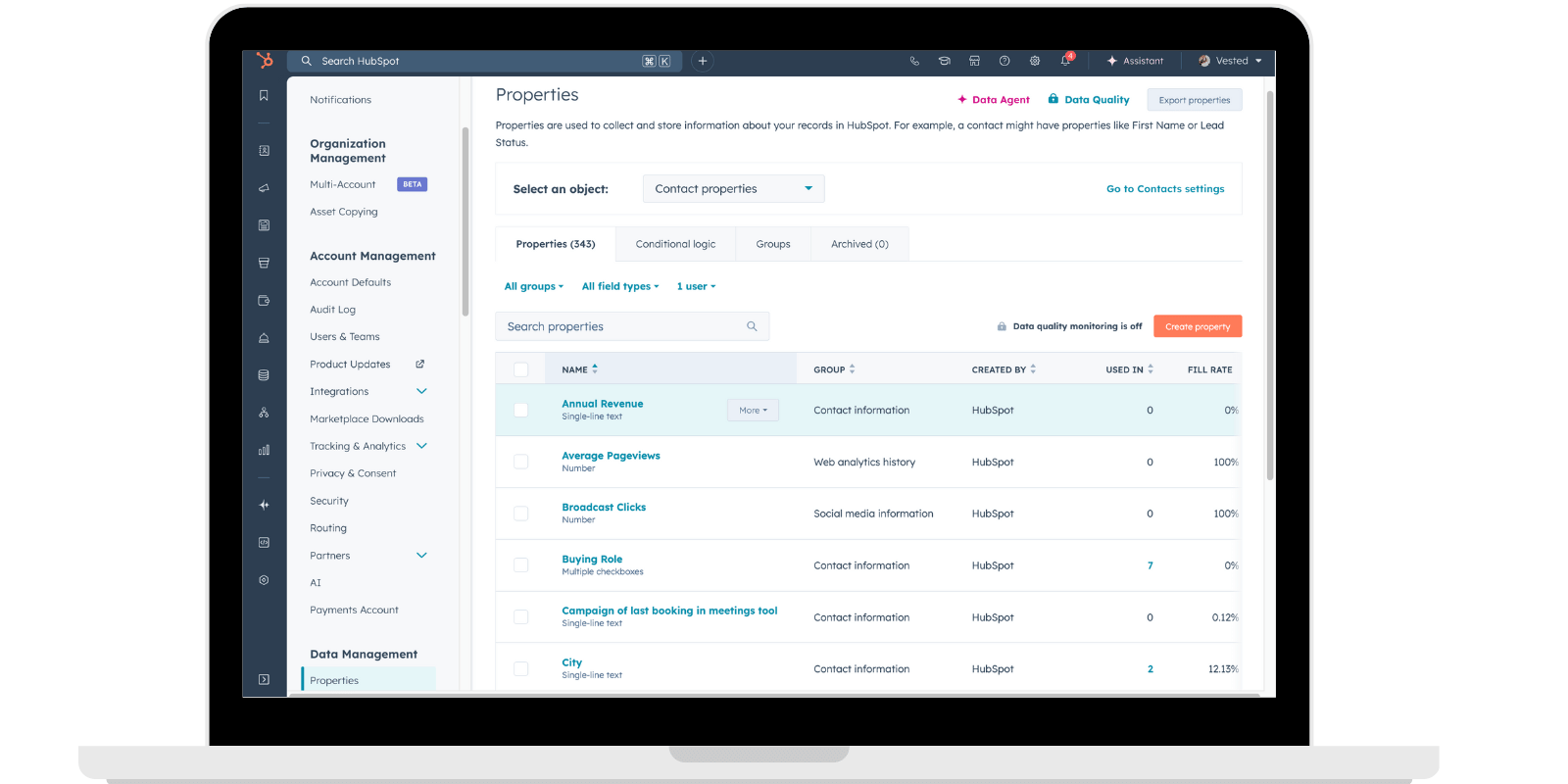
Pro tip in HubSpot: Lean on calculated properties, rollup properties, or AI-suggested fields before creating new ones. Let the platform do the heavy lifting.
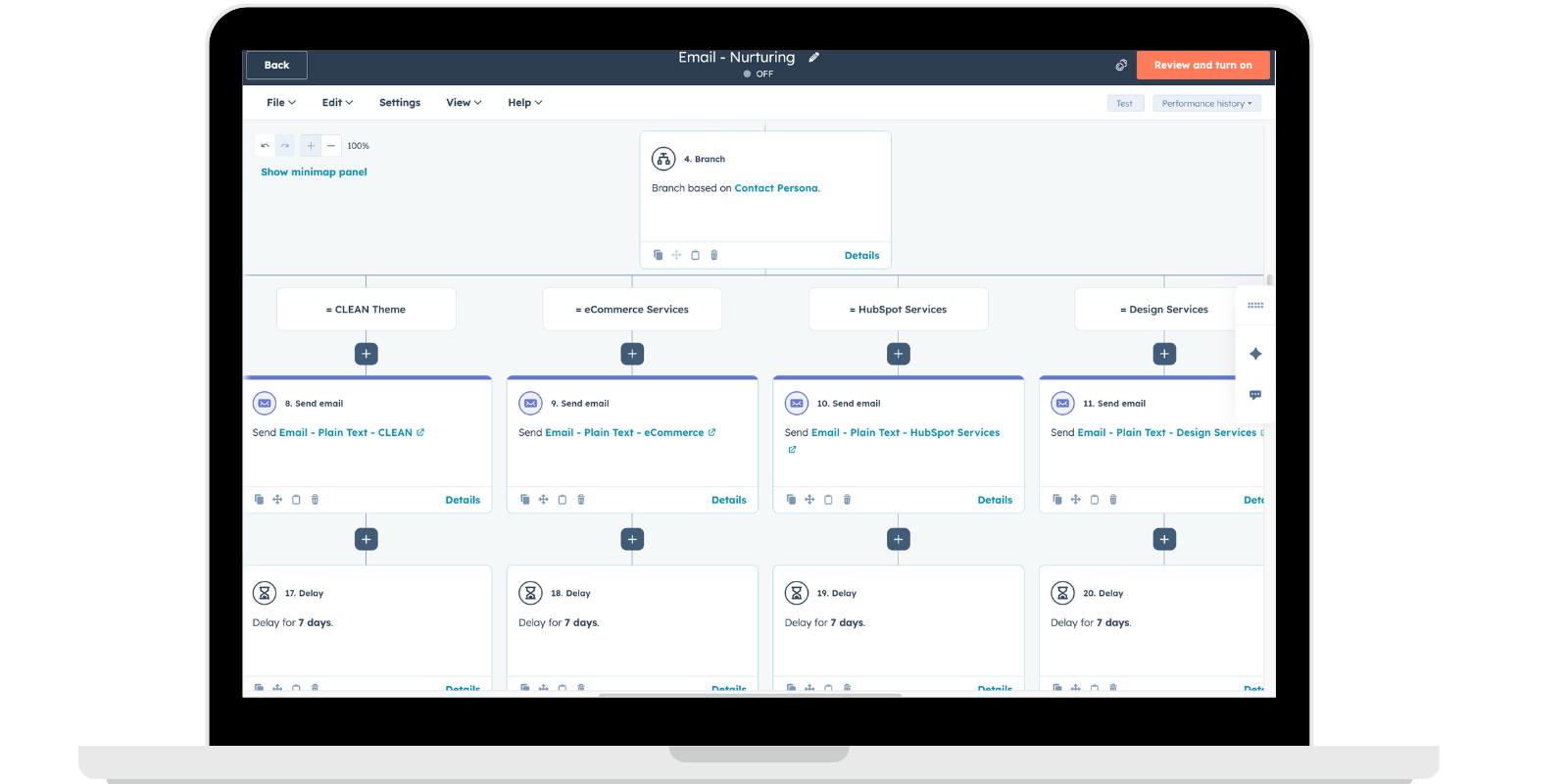
Pro tip in HubSpot: Use Hubspot's Marketing Studio’s AI workflow suggestions to generate clean starters, then refine instead of building from scratch.
%20-%20Vested%20(2)%20(1).png?width=1600&height=800&name=Graphics%20(1600%20x%20800%20px)%20-%20Vested%20(2)%20(1).png)
CRM customization done right is a game-changer. It turns your platform into a revenue engine tailored to your team. Done wrong, it is a black hole of time and frustration.
Before adding more fields, workflows, or integrations, it is worth confirming your foundation is sound. Many teams discover that their biggest issues are not customization problems at all, but structural HubSpot setup issues. If that sounds familiar, this breakdown on how to tell if your HubSpot portal is set up wrong can help you spot misalignment before customization makes it worse.
At Vested Marketing, we specialize in smart, scalable CRM setups (especially HubSpot) that drive adoption and pipeline without the bloat. We help B2B teams avoid these exact pitfalls, clean up messy data, and build customizations that actually get used.
Ready to turn your CRM into a competitive edge instead of a headache? Contact us today to book a quick audit. We will show you exactly where to start (and what to skip). Let's make your CRM work as hard as your team does!

Sources:
 As a certified HubSpot Partner Agency, we not only understand the benefits of using the inbound marketing platform to increase traffic and engagement, improve SEO, generate leads, design effective websites and boost sales, we know how to make it happen.
We are inbound marketing experts, SEO gurus and top-notch website developers.
Our team of Engineers Turned Marketers can help get you noticed - for a more innovative and effective way to reach customers, or provide a more seamless way for companies to find your services. Inbound Marketing has no limit to industry, serving from Crypto & NFT, mining, oil and gas, technology & automation, engineering, technology, construction, healthcare, specialty pharmacy, to industrial & manufacturing.

Discover why content marketing underperforms without a strong CRM strategy and how integration drives personalization, attribution, and revenue...

Learn how to fix HubSpot when it isn’t driving revenue by correcting lifecycle stages, pipelines, automation, and reporting gaps.

Discover the power of inbound marketing to build trust, generate leads, & grow your business through value-first content & meaningful customer...